


Boating with children: our best boat safety tips

In this article, we bring together our best tips for family-friendly boating to help you create a secure environment on board. Our boats are designed with families in mind, with safe decks, enclosed seating, and user-friendly equipment. This guide covers:
- Lock and mooring safety
- Age-specific boat safety tips
- How to make safety a fun activity for children
- Boating safety tips from Le Boat experts
- Everyday habits for boating safety
At a glance, here are our key safety rules for boating with children:
- Children should wear a well-fitting life jacket whenever they are on deck.
- Before locking, mooring or setting off, children should move to a designated safe area away from the edge.
- Adults should handle the ropes and helm, while children can help with simple supervised tasks such as keeping watch.
- If something falls into the water, children should alert an adult rather than trying to retrieve it.
- Plan shorter cruising days with regular stops so children can explore, rest and enjoy the journey.


A boating holiday with children is one of the most enjoyable ways to spend time together. Days on the water unfold slowly, while screens are (mostly) forgotten and even simple moments, such as spotting wildlife, helping with the ropes, and sharing breakfast or lunch on deck, become treasured memories.
It’s natural for parents to have safety boating at the forefront of their minds. The good news is that with the right preparation, it won’t feel stressful or restrictive, but rather an empowering, confidence-building, and genuinely fun shared experience!
Lock and mooring safety: how to manage the biggest boating risks
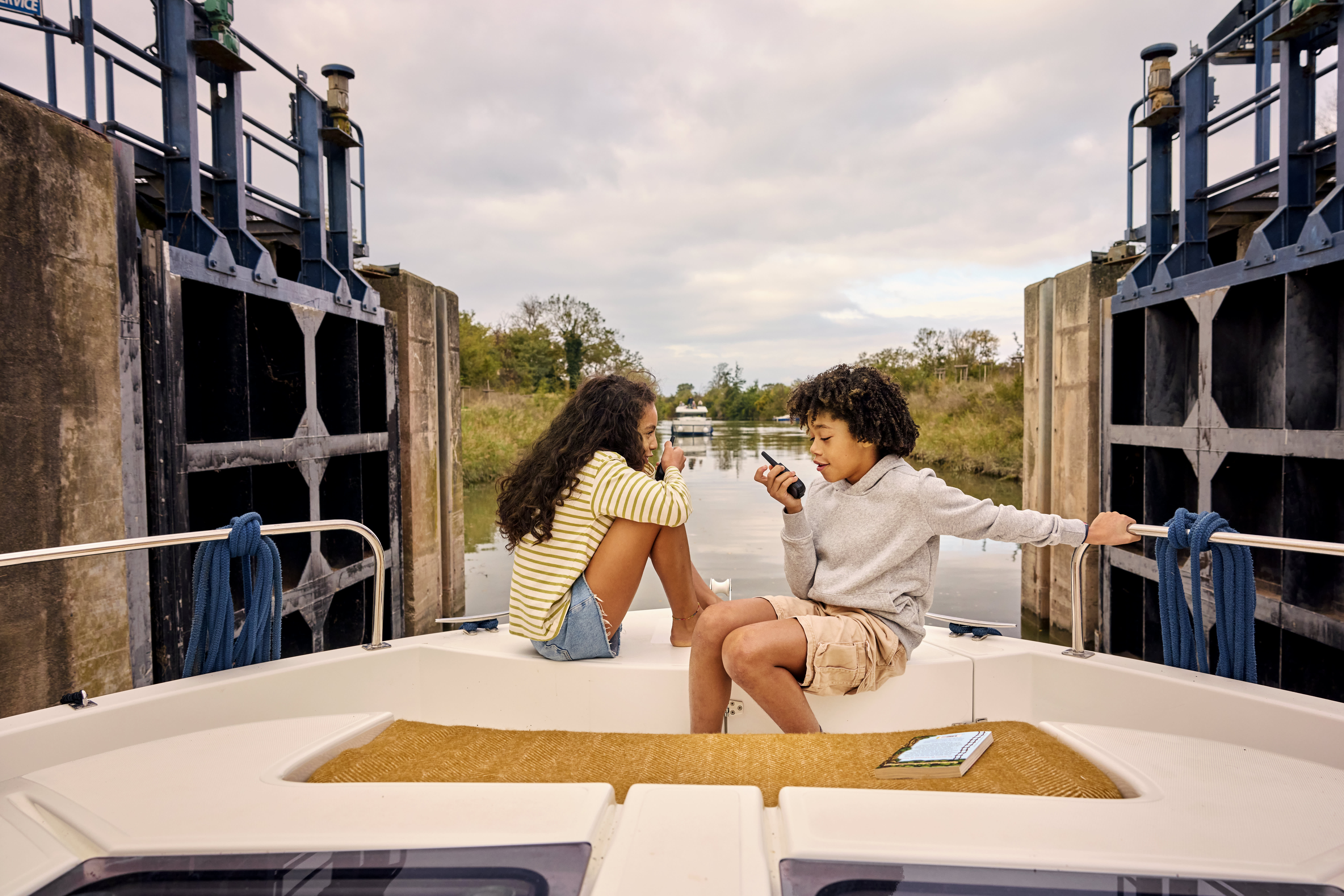
Locks and moorings are often where families feel least confident, and for good reason. These are the moments when boats are closest to hard surfaces, lines are in use, and water levels can change quickly.
If you’re new to boating, our step-by-step guide to mooring a boat walks you through the process.
The key is preparation, and for added peace of mind, some families have their children wear safety harnesses or reins while on deck to help reduce the risk of accidental falls.
How to keep children safe at locks and while mooring:
- Before approaching a lock or docking spot: explain to your children what’s about to happen in simple terms and ask them to move into a pre-agreed “safe zone” on the boat. This is often inside the cabin or seated in the centre of the deck, well away from the edges, ropes, and any moving parts.
- While tied up or waiting in a lock: children should never lean over railings or sit with their legs outside the boat, even when it feels still, as water movement and passing boats can create sudden shifts. Make it a routine for everyone to stay seated or hold a secure handhold during these moments.
- Getting involved in docking or going through a lock: older children can absolutely be involved, and many love having a job to do. Simple tasks, such as calling out distances, can help them feel part of the process without putting them in risky situations. The key is that their role is clearly defined and always supervised, turning what could be a tense moment into a shared activity.
Learn more about boating technique and safety
Age-specific boating tips: what children need at each stage
Of course, children are not all the same. Depending on their age, they will experience boating holidays in completely different ways, so boat safety works best when it’s adapted.
Below, we break down the main age groups:
Babies and toddlers aged 0-4
Supervision should be constant. Well-fitted life jackets should be worn whenever they’re outside, along with physical measures like stair gates, closed cabin doors, and designated play areas where they can move safely. Many families create a “boat safe zone” with cushions, toys, and books, so little ones have a space that feels like their own space while the boat is underway.
“Our ‘Dancer’ range of boats is especially popular with families who have younger children. These models feature a lounge/diner at the front of the boat that opens onto a high-sided, outside seating area. Kids love watching where the boat is going while playing safely indoors, and parents appreciate the added peace of mind that comes with a more contained space.”
Amandine Jimenez, Southern Europe Regional Marketing Manager at Le Boat
Young children aged 5-10
At this age, rules start to make sense, making it a great time to introduce simple ones like “no running on deck” or “ask before helping” to give them structure. You can also begin gentle man-overboard awareness by talking through what would happen, rather than acting it out dramatically. Sun safety becomes important here, too: hats, regular water breaks, and applying sunscreen together as part of the daily routine.
Pre-teens and teenagers aged 11+
They often want more independence, and boating with this age group works best when they’re given responsibility within clear limits. They can help check maps, keep an eye out for signs, assist with fenders, or even steer under close adult supervision once you’re cruising steadily. This helps them build practical skills and feel trusted and engaged. It becomes less about “managing” and more about sharing the boating experience.
Boast safety from the Le Boat experts
Strong safety habits are built on experience, and there’s reassurance in knowing that the advice you’re following comes from people who work with boats every day.
Cédric Vidal Berenguel, Regional Manager at Le Boat, has been with the company for over 25 years and regularly supports families preparing for their time on the water. His advice is simple and practical:
“Always stay vigilant, make sure children are in a safe position during every manoeuvre, never allow them to handle ropes, and if someone or something falls into the water, children should be taught not to try to retrieve it, but to call an adult immediately.“
Panagiota Tsounaka, Inventory Manager and former Base Manager at our Thames Base, has been with Le Boat since 2022 and has a wealth of experience with families boating with children. She says:
“River and canal boating holidays are a big adventure for little captains! Even when waterways are usually calm, children still need extra care: lifejackets should always be worn on deck, little hands kept clear of ropes and the helm near locks and bridges, and cruising days planned with shorter distances. By slowing down, following the flow, and enjoying the journey, families can turn every trip into lasting memories.”
Florent Courbez, Regional Manager for Northern and Central France:
“The excitement can sometimes make children forget about potential risks on board. That’s why I always recommend that why I children wear life jackets whenever they’re on deck and only take the helm in wide, open stretches with an adult by their side. Regular stops are also important, giving children and teenagers the chance to explore and recharge. Above all, a boating holiday is a wonderful opportunity to step away from screens and reconnect with nature, the scenery and the wildlife around you.”
Learning from our experts helps families feel confident on the water; if you ever need advice, our Base Teams are always happy to help, making it easy for everyone to enjoy the adventure safely.

How to turn boat safety into an adventure: create a “Captain’s Watch”
One of the easiest ways to make safety a more enjoyable aspect of your holiday is to give it a name and a purpose. Instead of simply assigning supervision, try designating a Captain’s Watch, transforming it from a rule into a game.
How does the Captain’s Watch work?
During key moments, approaching a lock, docking, or setting off, one adult is “on duty,” fully focused on what’s happening on and around the boat. Children can be invited to join the Captain’s Watch in simple, age-appropriate ways, turning supervision into something they feel part of rather than something happening around them.
Lookout roles for kids
Lookout duties are always a favourite. Younger children can help spot birds, bridges, or signs, while older ones might watch distances or alert the captain when another boat is approaching. It keeps them engaged, observant, and aware of what’s happening on the water!
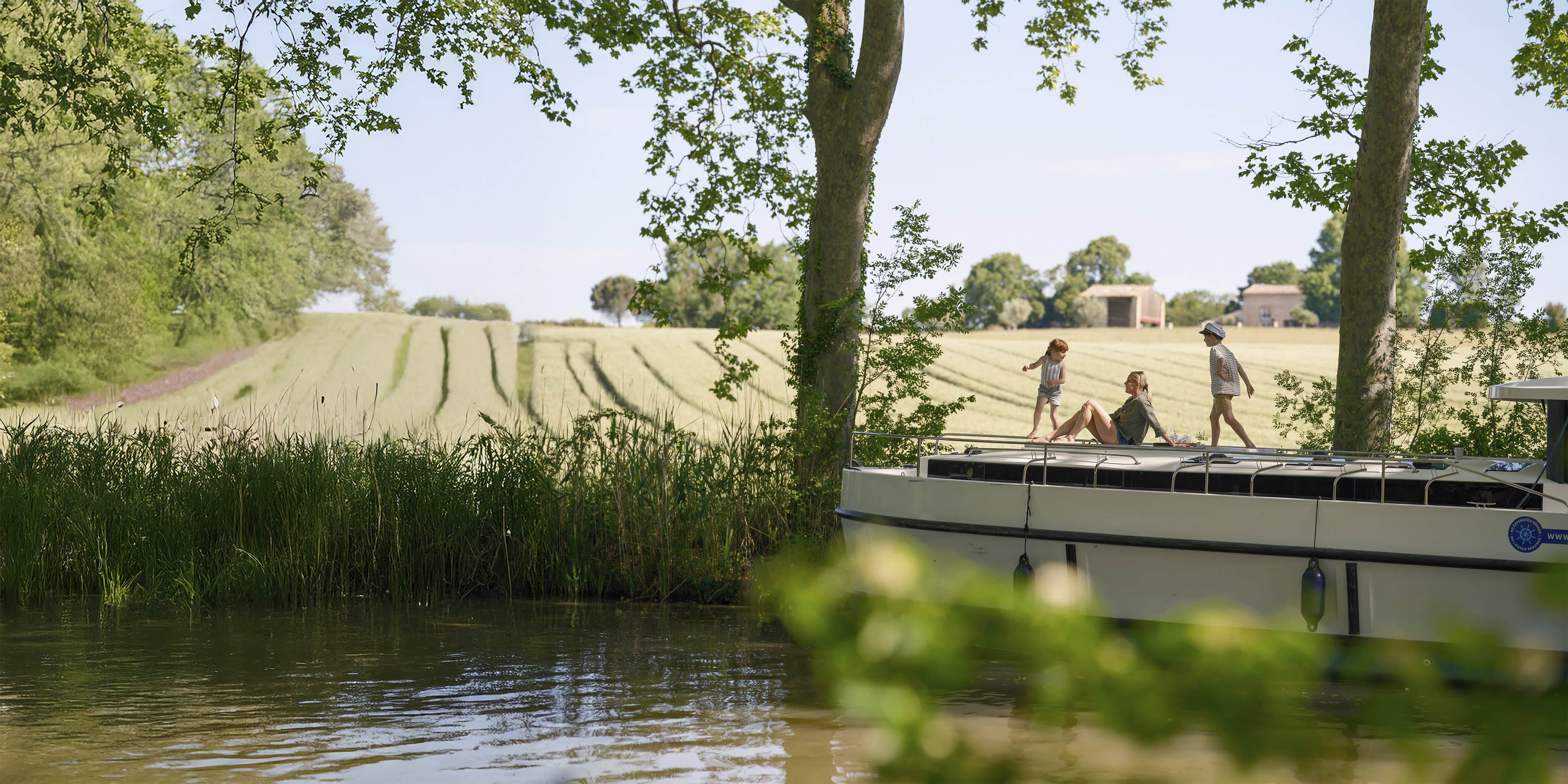
From watching to helping
As children grow more confident, their role can naturally expand. Simple jobs, such as fetching fenders, checking doors are closed, or reminding everyone about life jackets, make them active participants, reinforcing safety messages in a natural, positive way.
As these routines become part of life on board, you might rotate who joins the Captain’s Watch or create a simple checklist that the family runs through together. Many parents find that boating with kids becomes easier, not harder, as children grow into these shared habits and begin to look out for one another.
What are the everyday habits that support safe boating with children?
Beyond locks and manoeuvres, safe boating with kids is supported by many small, everyday choices. In our experience, here are the best tips for family-friendly boating holidays:
- Keep decks clutter-free to reduce trips and slips.
- Encourage children to wear non-slip shoes on deck.
- Ensure children wear life jackets, especially in destinations where it is mandatory.
- Promote moving rather than running to build body awareness.
- Make hydration and shade breaks a routine to help prevent fatigue.
- Involve children in general boat care, including wiping down surfaces, helping tidy the cabin, or checking that personal items are stowed before moving off.
All these habits reinforce the idea that the boat is a shared space with shared responsibilities, which gives children a sense of ownership.
Finally, remember that confidence grows from calm leadership! Kids take their cues from adult behaviour, so when instructions are clear, voices are steady, and time is taken, they feel secure. This is the secret ingredient for family boating holidays that feel not just manageable, but genuinely special!
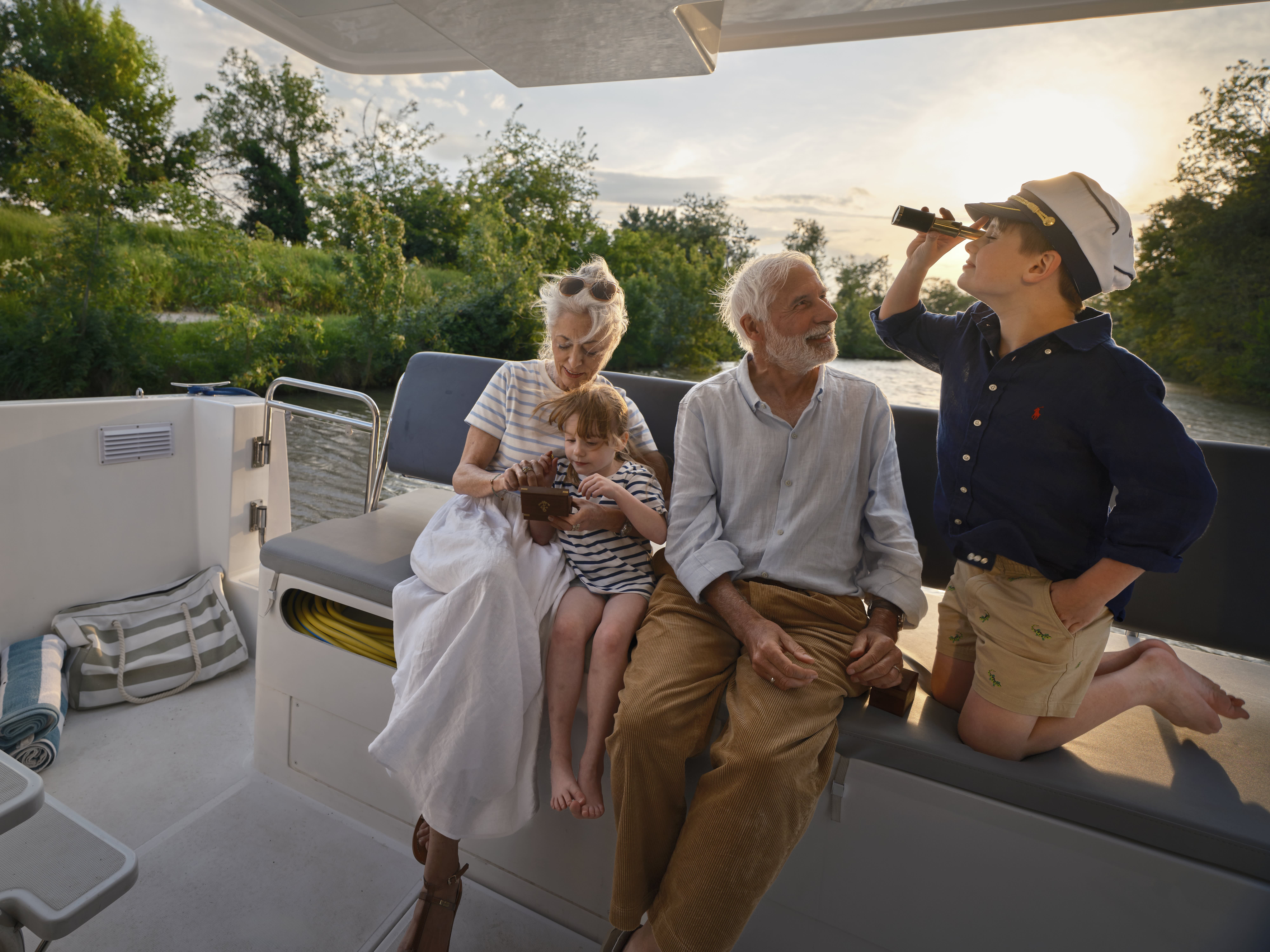
A safer boat means a happier boating holiday
Ultimately, boating with youngsters is about knowing where extra care is needed and building habits that help everyone feel protected and involved. With the right mindset, safety doesn’t sit alongside the adventure; it supports it. And when children feel confident on board, they’re free to do what they do best: explore, imagine, help, and enjoy every moment together on the water!
Children’s boating safety FAQ
Babies are welcome on a Le Boat holiday, as long as they wear a correctly sized life jacket on deck and are supervised at all times.
Life jackets are provided on board for every member of the crew, including babies and children.
Rules will differ from country to country, but Le Boat always recommends that children wear a life jacket while cruising.
Our Dancer fleet is especially popular with families with young children, as these boats have a lounge/diner at the front of the boat that opens out onto a high-sided outside seating area.
Ready to enjoy boating as a family?
discover our boating holidays and holiday deals, and start planning an unforgettable adventure!
Other articles
How to moor a boat in 4 simple steps

Our most experienced boaters reveal their holiday tips
