


How to go through a boat lock: step‑by‑step canal lock guide for beginners

Over our 55 years of experience introducing licence-free boating holidays to our clients, we’ve found that, despite our comprehensive pre-departure briefing and the ease of handling our canal boats, one of their biggest concerns remains how to go through locks, especially for first-time boaters.
However, we can’t stress enough that, despite feeling intimidating at first, going through a canal lock is one of those boating moments that quickly becomes part of the rhythm of life on the water. To navigate locks confidently, the crew should keep the waterway guide open at all times, so they know when a lock is coming up and what type of lock to expect.
From preparing your boat and crew to managing the boat inside the lock chamber and exiting smoothly, in this article, we explain exactly how to go through a canal lock step by step, walking you through each stage with practical advice, clear safety guidance, and tips that will make your boating holiday smoother, safer, and easier.
How to go through a canal lock (quick steps):
- Prepare your boat and crew before entering the lock
- Enter slowly and thread ropes correctly
- Manage water level changes safely
- Exit the lock when signalled
In this article:
Locks: what they are, their purpose and history
Before moving on with our guide, we’d like to take a step back and shed some light on what locks are, when they were invented, and what their purpose is.
What are locks?
Locks are watertight chambers with gates at each end that allow boats to move between sections of water at different levels. By filling or emptying the chamber, boats are raised or lowered in a controlled way.
What’s the purpose of boat locks?
Locks enable navigation along waterways across changing landscapes, allowing boats to travel uphill and downhill safely where water levels vary. Well-known examples include the Canal du Nivernais and the Canal du Midi in France. The Canal du Midi, a UNESCO World Heritage site since 1996, features an innovative 17th-century system of locks that allowed boats to cross a watershed and set the standard for canal engineering across Europe.
When were canal locks invented?
Early forms of locks were developed in China around the 10th century, with the modern pound lock design spreading across Europe from the 14th century and becoming central to inland waterways.
What are the most common types of locks?
Every canal lock has its own character, and during your Le Boat boating holiday, you may encounter different types, including traditional manual locks, fully automated locks, or large commercial locks shared with working vessels. Let’s have a look at the main lock types.
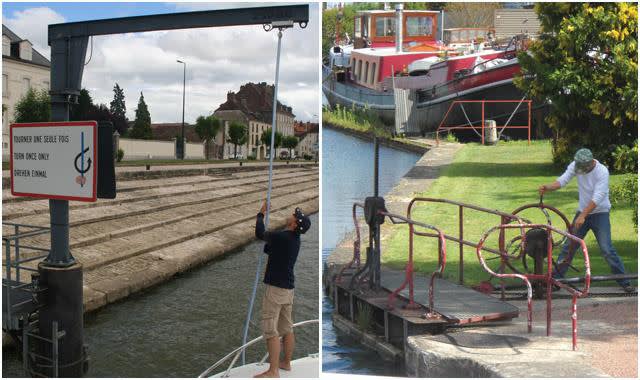
- Manual locks: operated by hand using paddles or gates, either by the boaters themselves or by a lock keeper. These are common on traditional canals.
- Automated locks: these locks use buttons, levers, or sensors and are typically found on larger or more modern waterways. They can be operated by a lock keeper or by the boat crew. When the crew is in charge, one person should remain next to the control panel throughout the operation, ready to hit the red stop button if an emergency arises.
- Commercial or large-scale locks: designed to accommodate bigger vessels and shared with working or freight boats.
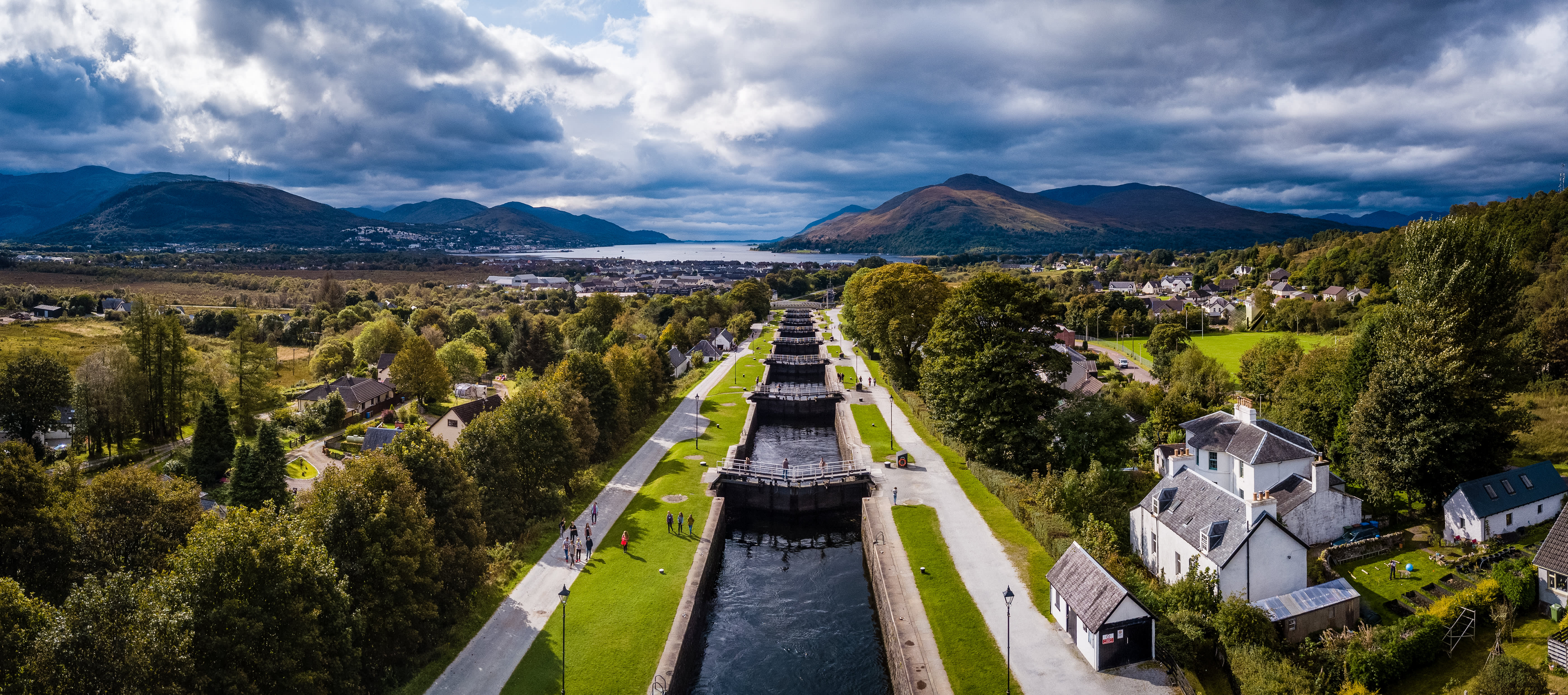
- Staircase locks: a series of connected lock chambers without intermediate pounds, requiring careful coordination. A notable example is Neptune’s Staircase on Scotland’s Caledonian Canal, the longest staircase lock system in Britain (and one you can see in person on a 7-night return itinerary from our Laggan base).
- River locks: built to manage changing river levels and currents, often influenced by weather and water flow.
Going through the locks with a canal boat step-by-step
As we said, every canal lock is slightly different, but the process remains consistent. All you need to do is to take your time, communicate clearly (with your crew and, when possible, with the lock keeper), and focus on safety at every stage. By keeping this in mind, it will become an enjoyable part of the journey in no time!
1. Preparation: getting ready to enter the lock
Approaching a lock calmly and prepared sets the tone for everything that follows. As you near the lock, slow down early and observe what’s happening ahead. Check whether the lock is already in use, if a boat is exiting, or if a lock keeper is present and giving instructions. If the lock isn’t ready, moor your boat about 100 metres away to give any vessels exiting the lock enough space.
It’s also the moment to brief your crew. Make sure everyone understands their role and knows where to stand safely. A few seconds spent preparing before entry can prevent rushed decisions once the boat is inside the lock chamber.
Checklist: fenders, lines and crew
Before entering any boat lock, take time to run through a simple checklist:
- Position fenders on both sides of the boat so they’re ready to protect the hull against the lock walls.
- Prepare bow and stern lines so they’re easy to access and free to run.
- Agree on clear crew roles in advance. One person should be responsible for steering, while others handle ropes or assist with the lock if required. Clear responsibilities reduce confusion and help everyone stay focused once the lock operation begins.
Understanding lock signals: lights and sound signals
Most locks use standard signals to manage traffic, though the exact lights and signals can vary from one cruising destination to another. Signals are there to control water levels and traffic safely, so ignoring them can put your boat and others at risk.
A green light means you may enter, while a red light tells you to wait. Some locks also use flashing lights or sound signals to indicate that the lock is being prepared or that priority traffic is approaching.
All signals and lights are detailed in the waterway guides, so it’s important to check them before setting off. Always wait for the correct signal before entering, even if the lock appears empty.
2. Entering the lock: positioning and safety
Entering the lock is about control rather than speed. A steady, unhurried entry makes positioning inside the lock much easier.
- Approach slowly, keeping the boat straight and centred, and
- Be ready to respond to instructions from the lock keeper or crew ashore.
- Be aware: watch the lock walls, gates, and any other boats sharing the space. Small corrections made early help avoid sudden movements later.
Once the boat is in position, the next important steps involve rope handling and managing the boat as the water level changes. These will be explained in more detail in a later section.
Priority rules: commercial and leisure boats
On many waterways, commercial vessels have priority over leisure boats. If a working boat is approaching or waiting, allow it to enter or exit first unless a lock keeper directs otherwise. When multiple boats are waiting, they should enter the lock in the order they arrived.
Understanding and respecting priority rules keeps traffic flowing smoothly and avoids unnecessary delays. When in doubt, wait for a clear signal or instruction before proceeding.
Entering slowly and positioning correctly
When signalled to enter, move forward slowly and under full control. Use gentle engine movements rather than continuous power, and keep the boat aligned with the lock walls.
Note that in Canada it’s standard practice to turn the engine off once inside the lock, whereas in France the engine can remain on; practices in other countries may vary, so always follow local guidance.
Position the boat as far forward as possible inside the lock chamber, unless told otherwise. Once in place, put the engine into neutral and wait for the next stage of the lock operation. If a crew member has stepped out to handle the ropes, they can also assist in positioning the boat using a hook to keep it steady and correctly aligned.

3. The core manoeuvre: inside the lock chamber
Being inside the lock is where preparation and teamwork really matter. Water levels will change, and the boat will rise or fall accordingly. Staying calm, alert and communicative is key to managing this stage safely.
Whether ascending or descending, the principles remain the same:
- Control the boat with lines
- Monitor water movement
- Respond steadily
The slipping technique explained
The slipping technique is crucial to the safe use of locks, as it keeps the boat close to the wall without pulling it tight or allowing it to drift.
- Take a line around a bollard, ladder or sliding pole, but never tie it fast. The line should always be free to move.
- As the water level changes, allow the rope to slip gradually through your hands while maintaining light tension.

Managing water flow and turbulence
As water enters or leaves the lock, flow and turbulence can increase quickly. Be prepared for the boat to move slightly and adjust line tension as needed. Avoid using the engine unless necessary, and only at very low power. Hands, feet and loose clothing should always stay well clear of the lock walls and fittings.
Communication with the lock keeper and crew
Clear communication is essential throughout the lock process. Maintain visual contact with your crew and the lock keeper whenever possible, and use simple, agreed signals or verbal instructions. If something doesn’t feel right, speak up early. Small adjustments made in time can prevent bigger problems as water levels change.
4. Exiting the lock: continuing your journey
Once the water level has equalised and the gates open, it’s tempting to move off quickly. However, a controlled exit is just as important as a careful entry. Take a moment to assess conditions outside the lock, including current, wind and other traffic, before engaging the gear.
Order of exit from the lock
If more than one boat is inside the lock, the lock keeper will usually indicate the order of exit. Larger or commercial boats may leave first, followed by leisure craft. Wait for a clear signal before moving and ensure lines are fully recovered before the boat starts to move forward.
Exiting slowly and under control
Move off gently and keep speed low as you leave the lock chamber. Be aware of propeller wash, crosscurrents, and how the rudder responds in confined water.
Once you are fully clear of the gates and in open water, you can gradually resume cruising speed.
How to manage vertical movement in a boat lock
Understanding how your boat moves vertically inside a lock helps you anticipate changes and react smoothly. Whether ascending or descending, the key is controlled rope handling and careful observation. Being aware of how water pressure affects the boat reduces the risk of sudden movement or snagging.

Ascending in a lock
When going upstream, the water level rises beneath the boat. Before entering, one crew member must step off to manage the ropes safely. Lines should be allowed to slip steadily while maintaining light tension to keep the boat close to the wall. Watch carefully for any points where the boat could catch on ladders, bollards, or uneven walls, and adjust promptly if needed. Once the lock passage is complete, the crew member can safely get back on board.
Descending in a lock
When going downstream, the water level drops, lowering the boat. Feed lines gradually to prevent them from becoming taut. Changes in water flow can feel stronger when descending, so stay alert and adjust rope tension as the boat settles at the lower level.
Common mistakes to avoid in a lock
Going through a canal lock is straightforward when done correctly, but there are a few common avoidable mistakes:
- Tying your lines off instead of holding them and adjusting as the water level changes. Lines must be able to move freely.
- Entering the lock too quickly which can make the boat harder to control and increase the risk of contact with the lock walls.
- Standing between the boat and the lock wall, which can be dangerous as the boat moves during filling or emptying.
- Ignoring the lock keeper’s instructions
- Forgetting to prepare ropes in advance, leading to rushed manoeuvres once inside the lock.
Essential safety rules when using a lock
Finally, a few essential safety tips to keep in mind: safety should always come first when going through a lock! Generally speaking, clear communication, staying aware, and keeping a calm head all help make the process safer for everyone. On top of that, it’s important to remember:
- Never tie ropes inside a lock.
- Never place yourself between the boat and the lock wall.
- Keep hands and feet clear at all times.
- Do not twist the ropes around your hands.
- Stay alert and ready to respond to changes.
How to go through a canal lock – FAQs
No. With this guide and your Le Boat pre-departure briefing, you’ll be shown how to use locks safely and confidently, with no licence or previous experience.
Yes, some cruising areas have very few locks, and certain routes have none at all. For an easy first trip, Camargue is a good place to start. Try Saint-Gilles return via Aigues-Mortes and Palavas, a 3-night route, or Saint-Gilles return via the Étang de Thau, a 7-night route: neither have any locks. You can also compare options in our region guides or ask us for more low-lock route ideas.
If locks are on your route, don’t worry. Locks are part of the rhythm of cruising in many regions, and most people get the hang of them quickly. You’ll be shown what to do before you set off, and you don’t need previous boating experience.
Ropes should always be kept free and allowed to slip as the water level changes. Never tie them fast.
It’s a rope-handling method where the line is allowed to slide through your hands to control the boat as it rises or falls.
Usually no. The engine stays in neutral once positioned, with very gentle power used only if needed.
Essential. Clear communication between the helm, crew and lock keeper helps keep the manoeuvre safe and controlled.
The basics are the same, but locks can be manual or automated depending on the waterway.
Ready to book your Le Boat boating holiday?
There’s no better way to experience the magic of boating in Europe and Canada than at your own pace. With this guide and our pre-departure briefing, navigating locks will feel straightforward, leaving you free to enjoy the journey to its fullest. From peaceful canals to wide-open waterways, every boating trip brings a new sense of discovery.
Other articles
How to moor a boat in 4 simple steps

Our most experienced boaters reveal their holiday tips
