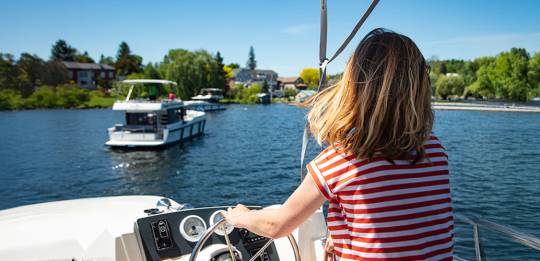
Boating etiquette: 8 common courtesies on the water

Picture this: the sun slipping beneath the water’s edge as you prepare to moor up for a candle-lit dinner in a medieval town on the scenic Canal du Midi. These are the moments that capture why so many of us love boating. And with such a diverse community out on the water, those experiences are even richer when shaped by mutual respect.
Boating etiquette, is the set of common courtesies and safety practices that help everyone enjoy time on the water responsibly. From managing your wake to respecting right of way, from protecting rivers and canals to sharing space considerately, proper boating etiquette creates a safer, more special experience for all.
In this article, we’ll walk you through the principal and most important rules of boating etiquette that contribute to a positive atmosphere on board, whether you’re new to boating or have years of experience.
In this article:
8 rules of boating for considerate river and canal cruising
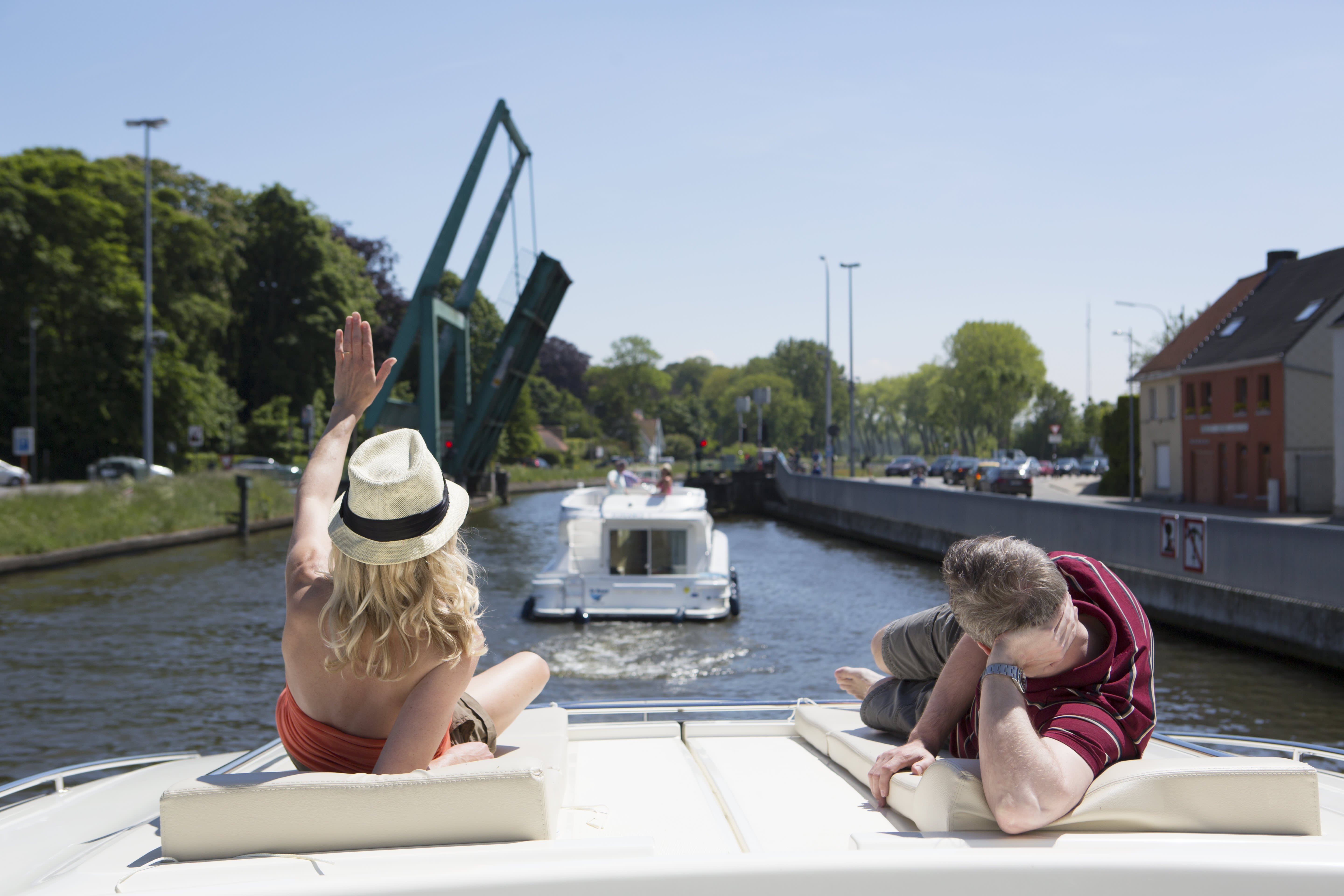
Whether your boating adventure is a short one in England or a long one in France, proper boating etiquette will help you and your crew enjoy your experience on the water.
Here are 8 rules to consider on boating holidays as a beginner.
Rule #1: Friendly greetings
A smile, a wave, or a simple “hello” is one of the easiest ways to practice good boating etiquette. Friendly greetings between boaters, anglers, and people on the banks help create a relaxed, welcoming atmosphere on the water. You may even hear the traditional “ahoy” from time to time, a greeting that dates back to early seafarers! These small, human moments often set the tone for the whole journey.
Rule #2: Right of way matters
Navigational courtesy is a core part of proper boating etiquette. Here are its main principles:
- Always be aware of who has the right of way, whether you’re cruising or passing moored boats.
- Slow down when approaching other boats, in marinas and ports.
- Avoid creating disruptive waves.
If another boat approaches from the left, you generally have the right of way and should maintain your speed and direction. Being predictable, patient, and aware helps everyone share the waterways more safely and comfortably, especially on busy rivers and canals. Also, be mindful of boats that are permanently moored along rivers and canals, such as those commonly seen on the River Thames.
Lock etiquette
Locks are shared spaces, and good boating etiquette makes a big difference to how smoothly they run.
- Always queue in the order boats arrive.
- Never cut in or rush ahead.
- Prepare your fenders and mooring lines before entering.
- Avoid blocking the lock entrance while getting ready.
- A friendly word of thanks to the lock keeper or to fellow crews is always appreciated!
Rule #3: Be considerate around anglers and fishermen
Anglers and fishermen often rely on still water and long fishing lines, which can be difficult to spot. You may also share the waterways with kayaks, canoes, and paddleboards, which sit lower in the water and can be harder to see. Practising good boating etiquette means keeping a careful lookout, slowing down, and passing at a respectful distance to avoid disturbing others or snagging lines. A little consideration goes a long way in keeping the waterways enjoyable for everyone.

Rule #4: Respect quiet zones and keep noise down
Many waterways pass through residential areas, nature reserves, and designated quiet zones. Keep noise to a minimum, especially early in the morning or later in the evening. Lowering voices, reducing music volume, and slowing your speed all help preserve the calm atmosphere that makes boating so appealing in the first place.
Rule #5: Protect wildlife and natural habitats
Keep a safe distance from wildlife and avoid disturbing natural habitats by not cruising so fast that your boat creates waves that could damage river or canal banks and nesting areas. When mooring, be mindful of where you tie up; for example, avoid securing boats to trees or in sensitive spots, as this can damage habitats, particularly along scenic canals like the Canal du Midi.
Rule #6: Leave no trace on the waterways
Dispose of rubbish responsibly in the designated collection cans, ensuring that recyclable and non-recyclable items are sorted correctly. Le Boat’s base staff will be able to inform you about what can and can’t be recycled and available facilities. Never throw anything into the water or leave trash anywhere except designated collection facilities or public bins. It’s everyone’s responsibility to ensure clean waterways for future generations to also enjoy the beauty of nature.
Rule #7: Community spirit and helping other boaters
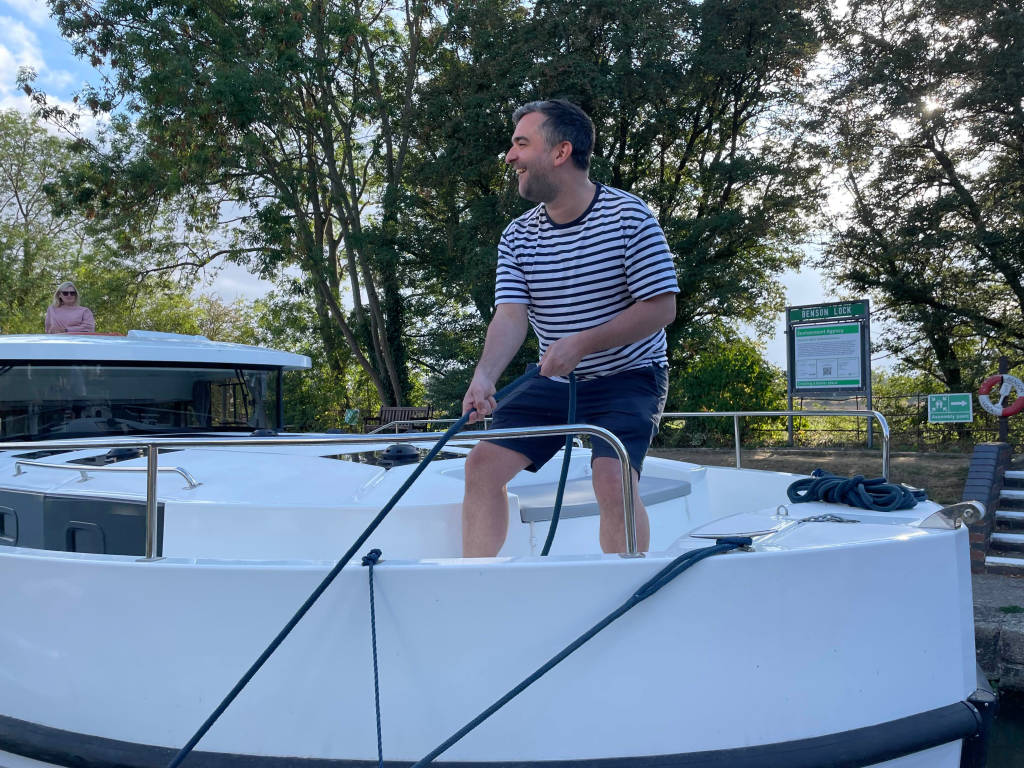
Boating has a long tradition of shared support. Don’t hesitate to ask for assistance and, in turn, offer help to fellow boaters when you can. Whether it’s at a lock, a mooring spot, or along a busy stretch of water, this community spirit is at the heart of boating and helps create a friendlier, more relaxed experience for all. As evidenced by the Boat Owners Survey, boat owners observe that individuals are generally more than happy to assist each other.
Rule #8: Mooring your boat considerately
Finally, being mindful when mooring up is one of the most important rules of boat etiquette. It’s crucial to avoid blocking access to other boats or facilities; learn how to moor your boat considerately by reading our article How to moor your boat. Rest assured, our experienced team is dedicated to teaching you this essential skill at check-in!

So, why does boating etiquette matter?
Now that we’ve explored the 8 rules of boating, it’s worth understanding why boating etiquette really matters. It isn’t about rigid rules or ticking boxes; it’s about helping everyone feel safe, relaxed, and welcome on the water.
Canal and river boat holidaymakers aren’t in a rush. There’s time to slow down, to talk, to share space, and to enjoy the journey itself. Being courteous and considerate is what allows those moments to happen naturally. It’s the quiet foundation of good boating etiquette, the current that keeps experiences flowing smoothly and makes time on the water more enjoyable for everyone.
Contributing to a positive boating culture
Contributing to “boating positivity” requires a collective commitment to boating etiquette, applicable to both experienced boaters and beginners. By enforcing the fundamentals of boating etiquette, we reinforce the pillars of safety, courtesy, and environmental responsibility.
The aim isn’t just to improve individual journeys, but to shape the atmosphere of the waterways as a whole. When boaters approach each trip with awareness, cooperation, and consideration for others, the result is a calmer, friendlier, and more enjoyable experience for everyone.

New to boating? No problem. Anyone can do it!
Because you don’t need a licence or prior experience to enjoy a Le Boat boating holiday, many arrive at our bases having never driven a boat before. That’s exactly why our canal boats are easy to use and reassuring to handle from the very first day. And if you’re travelling with children or pets, you’ll also find thoughtful features that support their safety and comfort, so everyone can relax and enjoy the waterside views.
If you’re curious to see what’s possible, you can explore our canal and river boats or discover how easy boating can be by watching our video. Before you set off, our team will show you the ropes, brief you, and offer all the support you need by answering practical questions, showing you what good boating etiquette looks like in real life, so you can relax and feel confident on the water!
Boating etiquette FAQs
At Le Boat, the most important rule of boating etiquette is using common sense and showing courtesy to others on the water. Safe speeds, good wake control, and awareness of nearby boats, anglers, and wildlife help everyone enjoy a calmer boating holiday on rivers and canals.
Boating etiquette keeps Le Boat waterways safe, calm, and enjoyable for everyone. Simple actions such as managing speed, slowing near moorings, and respecting wildlife make a noticeable difference to the overall boating holiday experience.
Canal and river boats pass on the right-hand side. This means the left side of your Le Boat vessel passes the left side of the approaching boat, keeping movement predictable and in line with proper boating etiquette.
Passing on the right, also known as the starboard side, comes from long-standing boating tradition, which Le Boat follows. It keeps navigation consistent and reduces confusion on the water.
No. Le Boat does not allow night-time cruising, even though the boats are fitted with lights. Boating is limited to daylight hours for safety and to support responsible use of the waterways.
Crafting better boating experiences
Other articles

The real cost of owning a boat – The costs after purchase

Our most experienced boaters reveal their holiday tips