


The complete travel guide to Alsace-Lorraine
A visit to Alsace-Lorraine takes you to the eastern shoulder of France, and a countryscape of half-timbered towns, expansive green valleys, lakes, vineyards, and Unesco-listed cities.
Storybook Strasbourg lies to the east, and Art Nouveau grande dame Nancy sits to the west. Then on the northern and eastern edges, there’s Germany, whose cuisines and cultures infuse into the region, making it unlike anywhere else in France.
Wild swimming, cycling, hiking, and abbey visits are all part of a boating holiday to Alsace–Lorraine. Plus, we recommend you get well acquainted with lengthy Alsatian lunches and lazy evenings spent sipping on the region’s exalted Riesling and pinot gris wines.
In this travel guide:
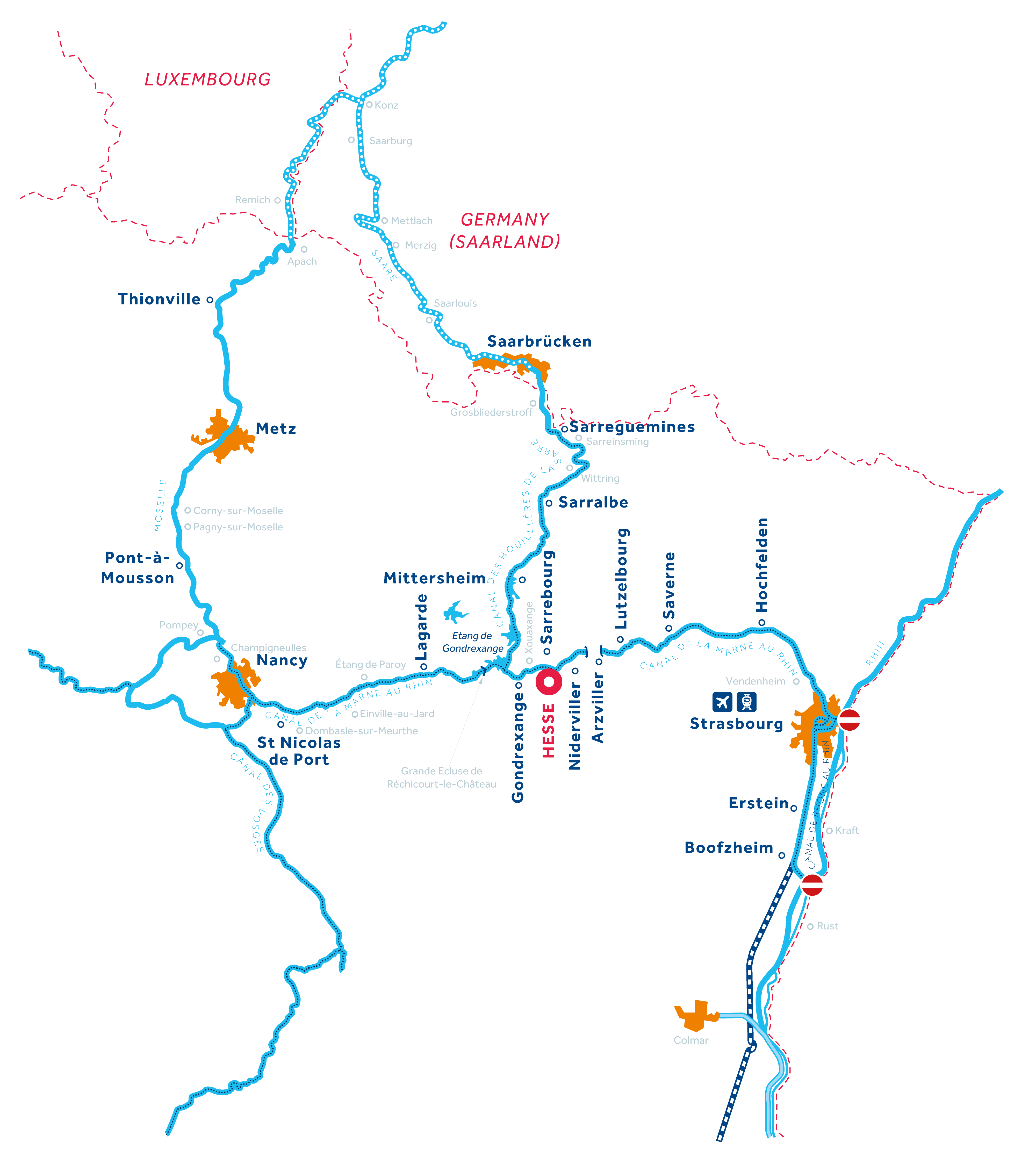
Map of our Alsace-Lorraine cruising region
What to see and experience in Alsace-Lorraine
Unravelling for more than 5,000 square miles, this part of France serves up billowing mountains, mirror-like lakes, evergreen pastures, and mile upon mile of vineyards.
The towns and villages along the Le Boat route have timelines that burrow back to the Medieval period, whilst city stops like Nancy and Strasbourg are prestigiously protected as Unesco World Heritage Sites.
Scenic villages and striking city architecture
The villages of Alsace-Lorraine are all half-timbered houses, rust-red roofing, and sharp church spires. Must-sees along the Le Boat route include Boofzheim, where the traditional ‘colombage’ structures date back to the 18th century, and Saverne, where the Grand Rue is a parade of wonky wood-and-wattle-fronted buildings.
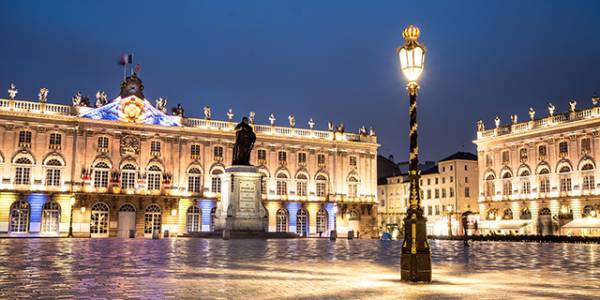
If you prefer the curves of Art Nouveau architecture, there’s UNESCO World Heritage-listed Nancy, said to be the birthplace of this 19th-century architectural movement. The city’s masterpieces include a set of ornate golden gates and fountains that once flowed with wine instead of water.
Historic Landmarks and Castles
Castles, cathedrals, chateaux and abbeys await in Alsace-Lorraine. Perched on the banks of the Moselle River in Pont-à-Mousson, Abbey des Prémontrés is a major highlight along the Le Boat route.
Spreading out for 12,000 square metres, the 18th-century abbey promises sculpted gardens outside and libraries, high-ceilinged hallways, and a series of grand statement staircases within.
Alternatively, a 70-minute bike ride or 15-minute taxi journey from Lutzelbourg, there’s Dabo Rock, where a chapel crowns the top of a rose-coloured sandstone bluff, 664 metres above the Lorraine Plateau below.

Outdoor activities
The countryside of Alsace-Lorraine is dotted with lakes and scored by walking and cycling trails. In fact, more than 17,000 kilometres of the former and 2,500 kilometres of the latter squiggle their way through the region.
The Le Boat stop of Saverne is a prime starting point for both gentle and harder hikes. One of the most memorable routes takes walkers out to Haut Bar Castle, a rock-top Medieval fort that’s known as The Eye of Alsace for its views, which stretch all the way to the spire of Strasbourg Cathedral on clear days. More experienced hikers, meanwhile, can tackle the trails that inch up into the Vosges Mountains.
For time by the water, stop by Sarrebourg, where Lévêque Lake is haloed by a four-kilometre walking trail and tree-shaded picnic spots. Or try Mittersheim, where a 220-hectare lake, watersports centre, and inflatable in-water assault course await.
If it’s fishing you’re into, Gondrexange’s 700-hectare lake is known for its carp, pike, and catfish. Pick up a fishing licence at the Le Boat base.
Gastronomy of Alsace-Lorraine
Marrying French and German influences, Alsatian and Lorraine cuisines are pure comfort food. You can count on hearty stews, baton-sized sausages, and a liberal use of potatoes, cabbage, and dumplings. Classic dishes include Flammekueche, Baeckeoffe, a slow-cooked mutton, beef, pork, and potato stew, the famous quiche lorraine and so many more!

Alsace-Lorraine Wine Route
Ribboning through 170 kilometres of vine-lined countryside, roughly 30 kilometres west of Strasbourg, the Alsace-Lorraine Wine Route connects 119 wine-growing villages and 720 producers.
The region’s signature wines include zingy rieslings, peachy pinot gris, and sparkling crémants, which can be sampled during everything from guided winery tours and cellar door tasting sessions to vineyard picnics and wine-paired lunches.
The easiest way to get here is to catch the train from Strasbourg to Molsheim, and then on to Rosheim, Obernai, or Barr. Alternatively, take the half-hour train to Colmar and hop on the Kutzig open-topped shuttle bus that snakes through the vineyards.
If you’ve hired a bike with Le Boat, take it on the train with you, and you can bike through a tendril of the 131.5-kilometre Vineyard Cycle Route that connects Marlenheim to Thann.
Places to visit in Alsace-Lorraine
Saverne
Overlooking the Rhine-Marne Canal, Saverne is nicknamed The City of the Roses, for having one of France’s oldest rose gardens, where 800 different varieties bloom between June and July.
Many of its buildings are rose-tinted, too, thanks to the use of blush-coloured sandstone, collected from the nearby Vosges hills. Of all these structures, Château des Rohan is the grandest. The former home of the Bishops of Strasbourg, it’s known as The Versailles of Alsace, and is open daily, except Tuesdays.

Le Plan Incline d’Arziller
Located downriver from Lutzelbourg, this one-of-a-kind boat elevator allows the Marne Rhine Canal to cross the Vosges Mountains. At 45 metres high and 108 long, it can lift boats of up to 800 tonnes like feathers!
The feat of engineering was built in 1969 to replace a flight of 17 locks, which used to take a full day to navigate. Today, the elevator takes just four minutes to ascend and descend.

Strasbourg
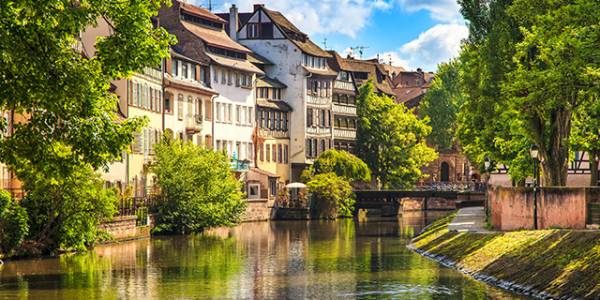
Mooching past the half-timbered buildings of Petit France, watching the astronomical clock strike solar noon at the Notre Dame Cathedral, and walking the ‘covered bridges’ of the city’s old ramparts are just a few of the things to do in this Unesco World Heritage City.
In between sights, be sure to take a time-out at one of the city’s traditional winstubs (wine lounges) and don’t leave without picking up a bag of traditional Alsatian gingerbread at Mirelle Oster.
When is the best time to visit Alsace-Lorraine?
May to September is the prime time to visit Alsace-Lorraine, thanks to its verdant vineyards, purring pavement cafes, and lakes that become lukewarm at the peak of the season.
For more active pursuits, visit in spring, when daily highs of 18 to 22 degrees create the most comfortable conditions for hiking and cycling.
To witness or even take part in the grape harvest, plan a trip for late August onwards.
Discover Alsace-Lorraine from a different angle
One of the best ways to see the region is from the water. The area’s canals and rivers place you right in the midst of the region, within easy striking distance of its historic towns, elegant cities, and the myriad walking and cycle trails that contour the countryside.
Undoubtedly, Alsace-Lorraine comes into its own in spring and summer, making these seasons the optimum time for a lazy-paced, wound-down adventure by boat.
More articles about Alsace-Lorraine

The most beautiful places to visit in Alsace-Lorraine

Where to eat in Alsace-Lorraine: our guide to the best restaurants
